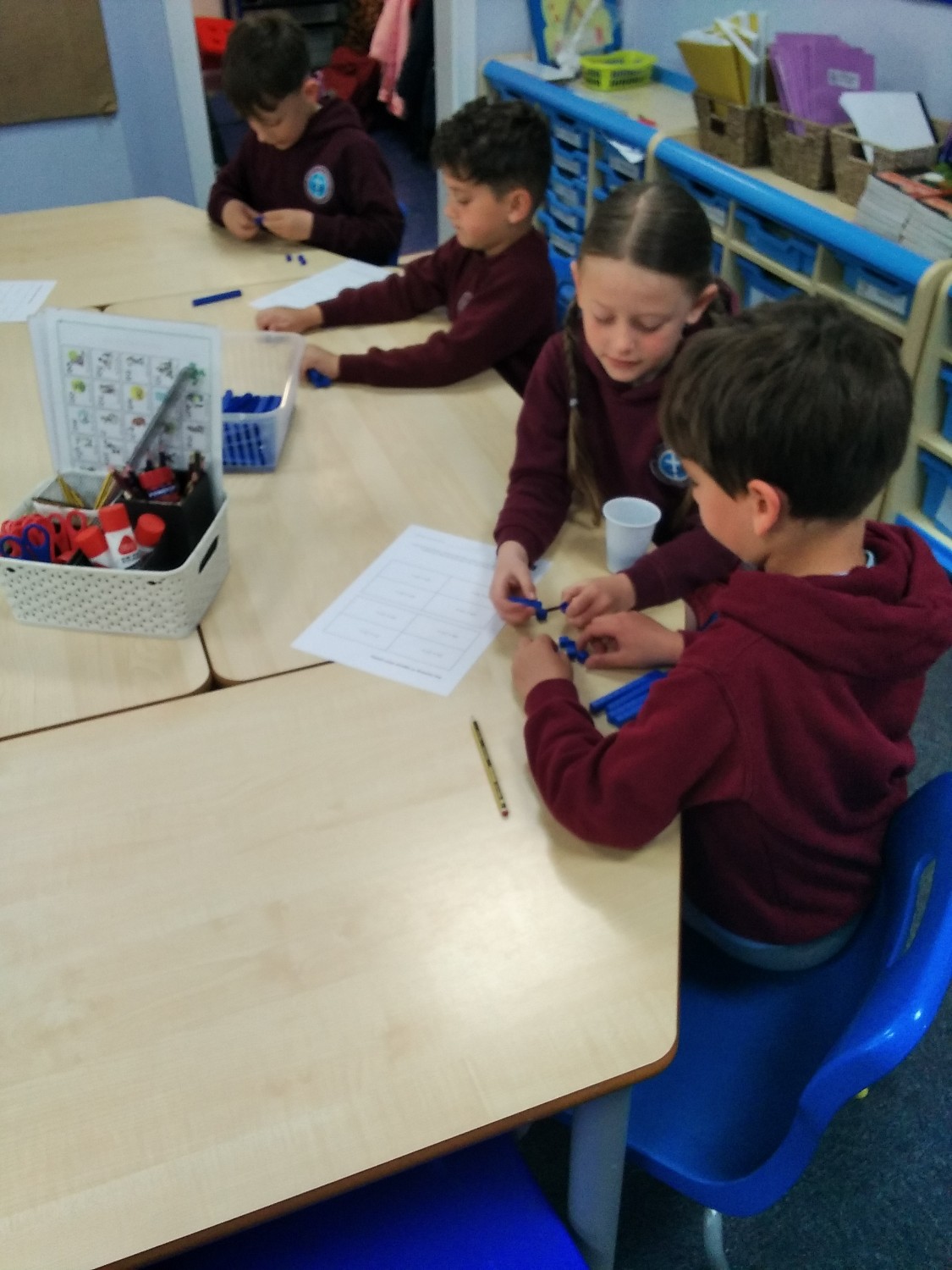
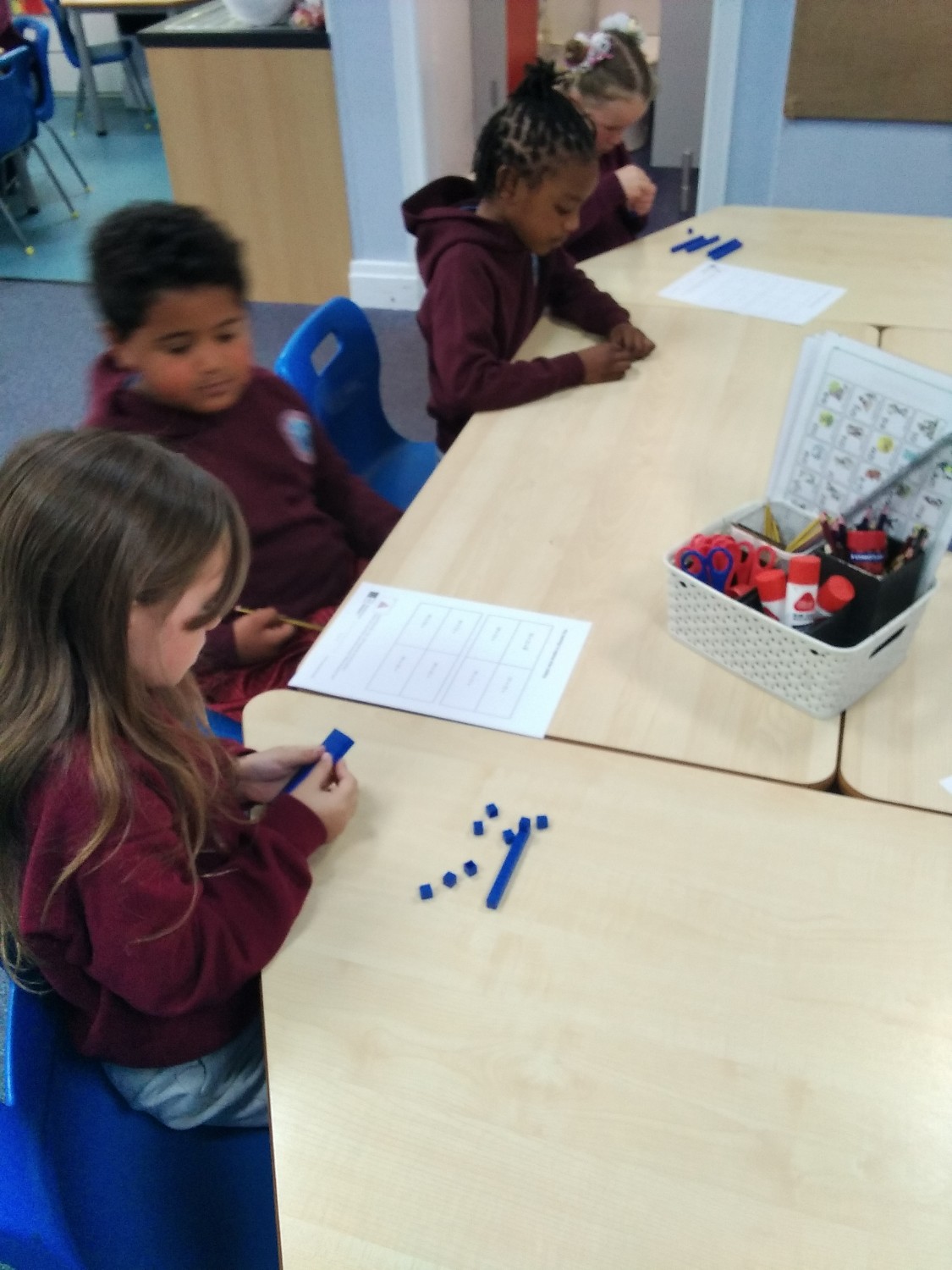
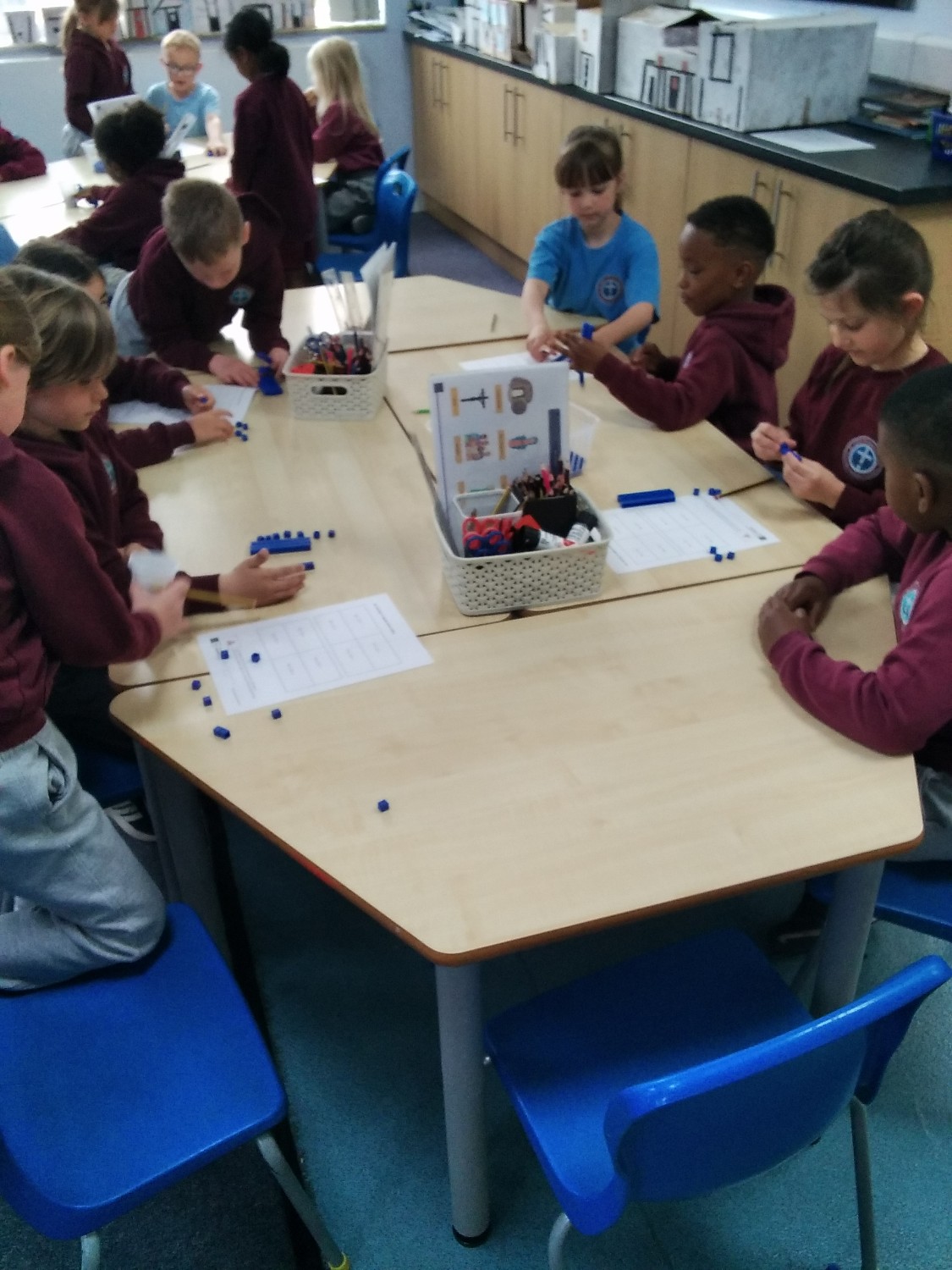
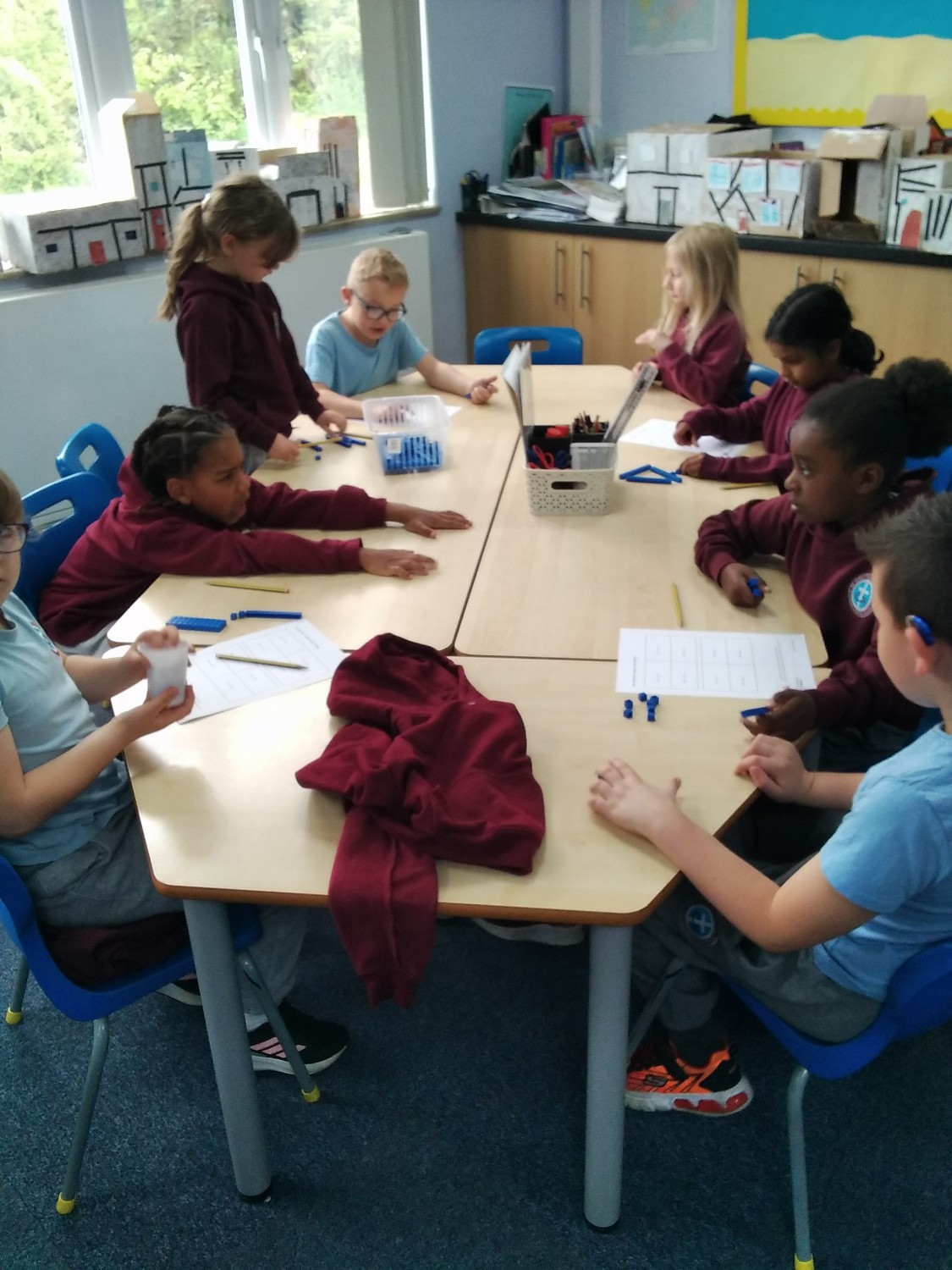
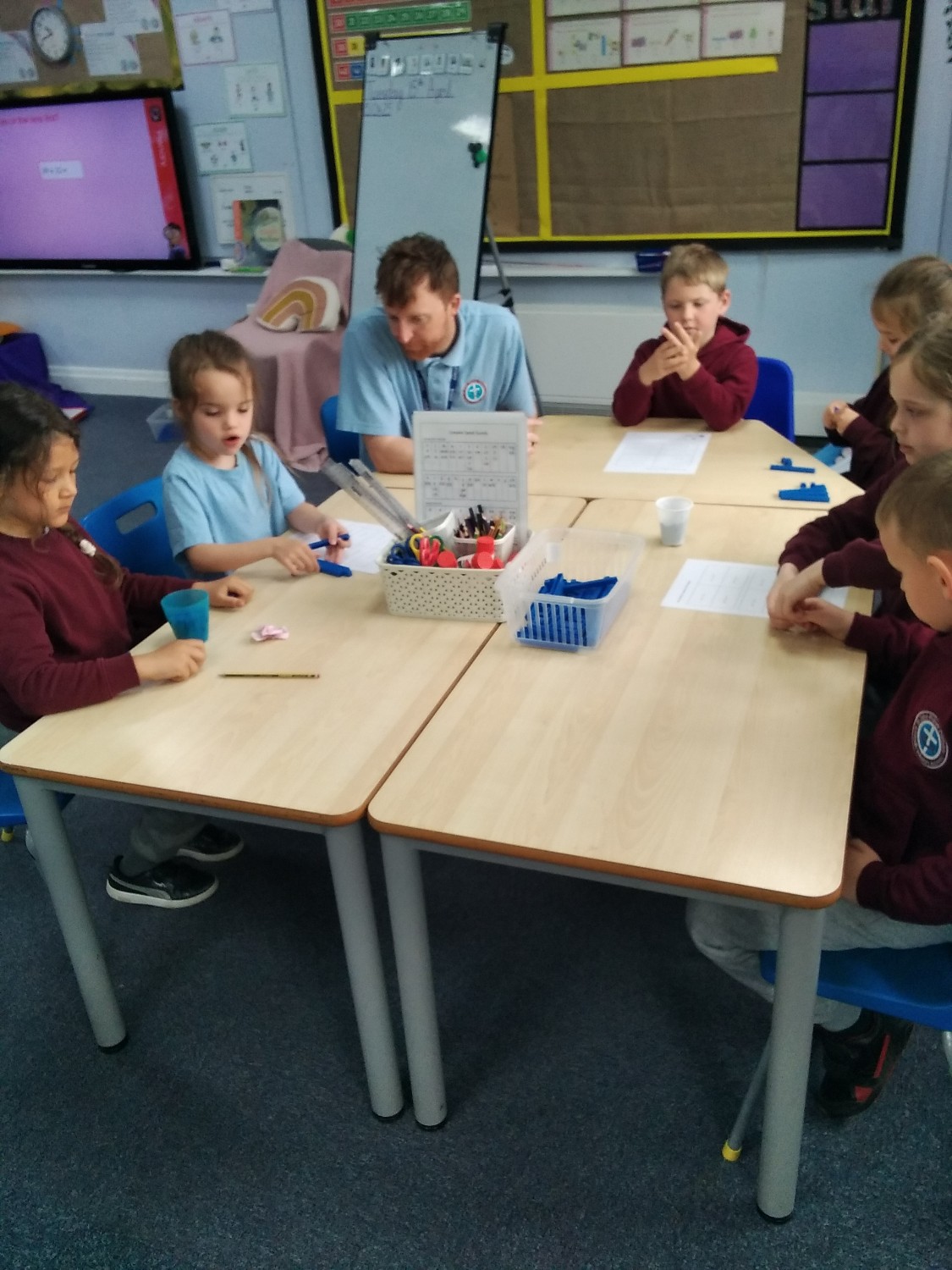
Our Y2 children are investigating different to add two 2-digit numbers together and have using some of our 'Diennes' equipment to add up the 'ones' and the 'tens' to find the answers. For a help video please click here.
What are Deines?
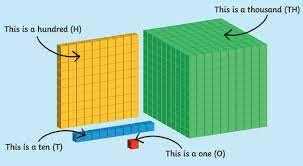
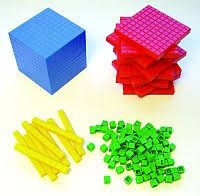
Dienes blocks, also known as Base Ten blocks or Multibase Arithmetic blocks, are physical manipulatives used in mathematics education to help children understand place value, addition, subtraction, multiplication, and division. They are typically made of colored plastic or wood and come in four pieces: ones (1cm cubes), tens (rods), hundreds (flats), and thousands (cubes).
What is their purpose? Dienes blocks help children visualize and understand the relationships between different place values in the number system, making abstract concepts more concrete and easier to grasp.
How do they work? Children can physically manipulate the blocks to represent numbers, perform calculations, and understand regrouping (carrying over) in addition and subtraction.
When are they used in class?
- Place Value: Students learn how to represent numbers using the correct number of ones, tens, hundreds, and thousands blocks.
- Addition and Subtraction: Dienes blocks are used to physically add or subtract groups of blocks, representing the operations visually.
- Multiplication and Division: They can be used to demonstrate multiplication as repeated addition and division as splitting into equal groups.
What are the benefits?
- Concrete Understanding: Dienes blocks provide a tactile and visual representation of mathematical concepts, making them easier for children to learn and remember.
- Improved Mathematical Skills: Using manipulatives like Dienes blocks can lead to better understanding of place value, number sense, and mathematical operations.
Who invented this resource?
The materials were created by Zoltan Dienes, a Hungarian mathematician, who believed that using manipulatives could help children learn more complex math at a younger age.