Talking about Holocaust Memorial Day (HMD) in primary school, carefully and in age-appropriate ways is essential to foster empathy, combat prejudice, and introduce themes of kindness and responsibility from a young age. It helps children understand the dangers of bullying and discrimination, using age-appropriate, sensitive stories to teach about respecting differences and standing up against unfairness.
This Year's Theme
The theme for Holocaust Memorial Day (HMD) 2026, 'Bridging Generations', is a call-to-action. A reminder that the responsibility of remembrance doesn't end with the survivors - it lives on through their children, their grandchildren and through all of us. This theme encourages us all to engage actively with the past - to listen, to learn and to carry those lessons forward. By doing so, we build a bridge between memory and action, between history and hope for the future.
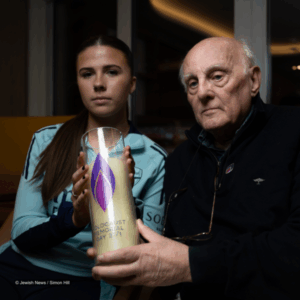
As the years pass, we’re growing more distant in time from the Holocaust and from the other, more recent genocides that are commemorated on HMD. That distance brings a risk – memory fades and the sharp reality of what happened becomes blurred, abstract or even questioned.
Bridging Generations highlights the crucial role of the next generation in preserving the memory of the Holocaust and carrying it forward. It highlights the power of intergenerational dialogue – of listening to those who came before us and of sharing those stories with those who come after. In doing so, we don’t just preserve memory – we connect it to the present.
Genocide doesn’t discriminate by age: infants, children, adults and the elderly have all experienced unimaginable suffering in different ways. In many cases, entire family lines were erased.
Bridging Generations invites us to honour each life – and honour those who left no family to carry their legacy – whose legacies live on not through bloodlines but through books, films and other interpretations.
Generations...
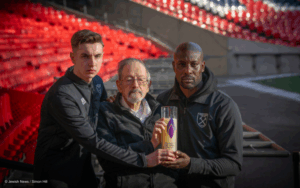
The murdered generation. The six million Jewish people murdered in the Holocaust, the non-Jewish people murdered because they were gay, disabled, Roma, Sinti or a member of another community targeted by the Nazis. We also learn and commemorate where persecution led in Cambodia, Rwanda, Bosnia and Darfur. The generation of people whose lives and voices were brutally taken away.
The first generation. Survivors themselves – those who lived through the Holocaust and other genocides in Cambodia, Rwanda, Bosnia and Darfur. A few, precious Holocaust survivors are with us still today. In addition, we can research the testimonies of those who survived the Holocaust and who died in the 1960s, 70s, 80s and more recently. This theme will encourage HMD organisers to research those who experienced and survived the Holocaust as adults but who passed away in the decades after the Holocaust.
The theme also includes the first-generation survivors of the more recent genocides, many of whom share their histories at HMD events each year.
The second and third generations. The children and grandchildren of survivors carry their legacy in a deeply personal way. For them, these stories are family history.
People today, of any generation, with no direct family link to the Holocaust or to recent genocides – many of whom will be organising and participating in Holocaust Memorial Day events around the country. Their role is just as vital. Through education, dialogue and a willingness to engage, we all inherit the responsibility of remembrance. Bridging Generations is about all of us. It’s about reaching across time and experience to keep memory and history alive and using them to shape a future that protects the dignity of every human being.
For more information, please click here. Thank you.